If you spend any time in the wellness world lately, you’ve probably noticed two nutrients dominating the conversation: protein and fiber.
Protein bars. Fiber supplements. High-protein yogurt. “30 grams of protein at breakfast.” “30 grams of fiber a day.” At first glance it can feel like just another nutrition trend. But the reality is a little more nuanced.

The reason these two nutrients keep showing up in research, clinical guidelines, and health conversations is because they influence some of the most fundamental systems in the body: hunger regulation, metabolism, muscle health, and the gut microbiome.
Both protein and fiber play powerful roles in appetite regulation, metabolism, muscle maintenance, and gut health. Let’s take a closer look at what the research says and why nutrition experts keep emphasizing these two nutrients.
The Protein Conversation: It’s Mostly About Satiety and Muscle
One of the biggest reasons protein gets so much attention is its effect on satiety, which is the feeling of fullness after eating.
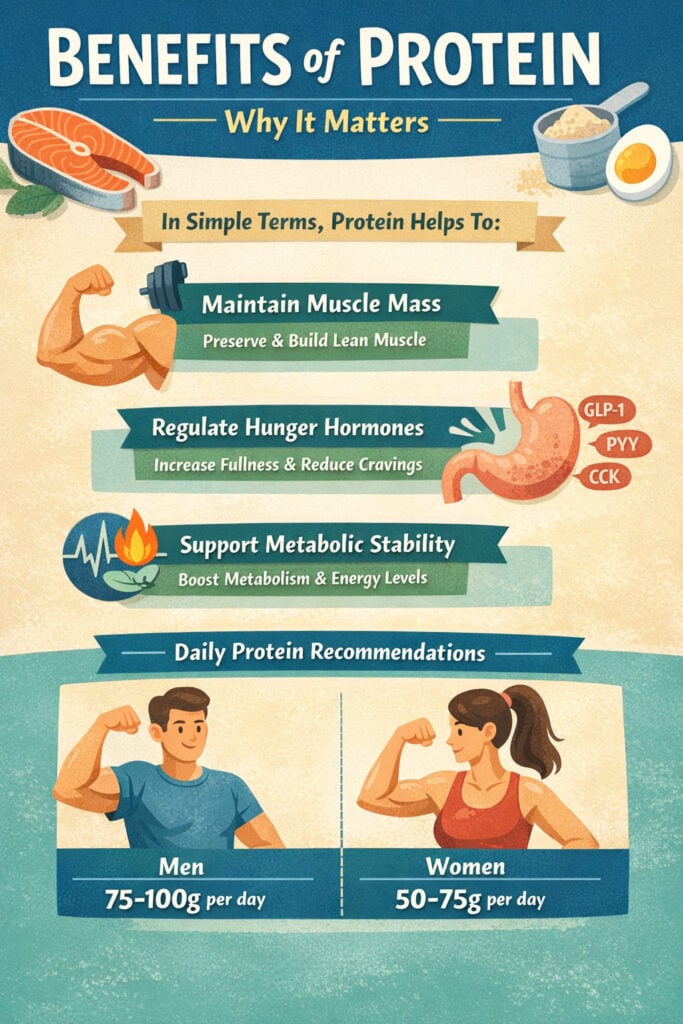
Among the three macronutrients, protein consistently shows the strongest effect on appetite regulation. Studies have found that protein stimulates hormones that signal fullness, including cholecystokinin (CCK), glucagon-like peptide-1 (GLP-1), and peptide YY (PYY). (source)
Research also shows that protein tends to be more satiating than carbohydrates or fat when calories are matched, which may naturally reduce overall calorie intake, improve metabolism, and increase the retention of lean muscle mass (source). This is one reason many nutrition strategies emphasize protein earlier in the day. A higher-protein breakfast has been shown to improve appetite control and reduce cravings later in the day.
Protein also plays another crucial role: preserving lean muscle mass.
During weight loss or aging, the body can lose muscle along with fat. Adequate protein intake helps maintain muscle tissue, which supports metabolic health and physical function.
Fiber: The Nutrient Most People Don’t Eat Enough Of
While protein gets most of the attention online, fiber is actually one of the most under-consumed nutrients in modern diets. Health organizations typically recommend about 25–38 grams of fiber per day, yet many people consume far less.
Fiber is important for several reasons.
- First, it supports digestion by adding bulk and slowing gastric emptying, which helps regulate blood sugar and appetite.
- Second, fiber feeds beneficial bacteria in the gut. When gut microbes ferment fiber, they produce compounds called short-chain fatty acids, which support metabolic health, immune function, and the intestinal lining.
Higher fiber intake has also been associated with:
• Improved metabolic health
• Lower body weight
• Reduced risk of chronic disease
Several systematic reviews have found that fiber can increase feelings of fullness and may help regulate appetite and energy intake. (source) In other words, fiber does far more than help with digestion. It plays a central role in the gut ecosystem, and maintaining a healthy microbiome.
Why Protein and Fiber Together Work So Well
One of the most interesting findings in nutrition research is how powerful protein and fiber together can be. Meals that combine both tend to slow digestion, stabilize blood sugar, and sustain fullness for longer periods.
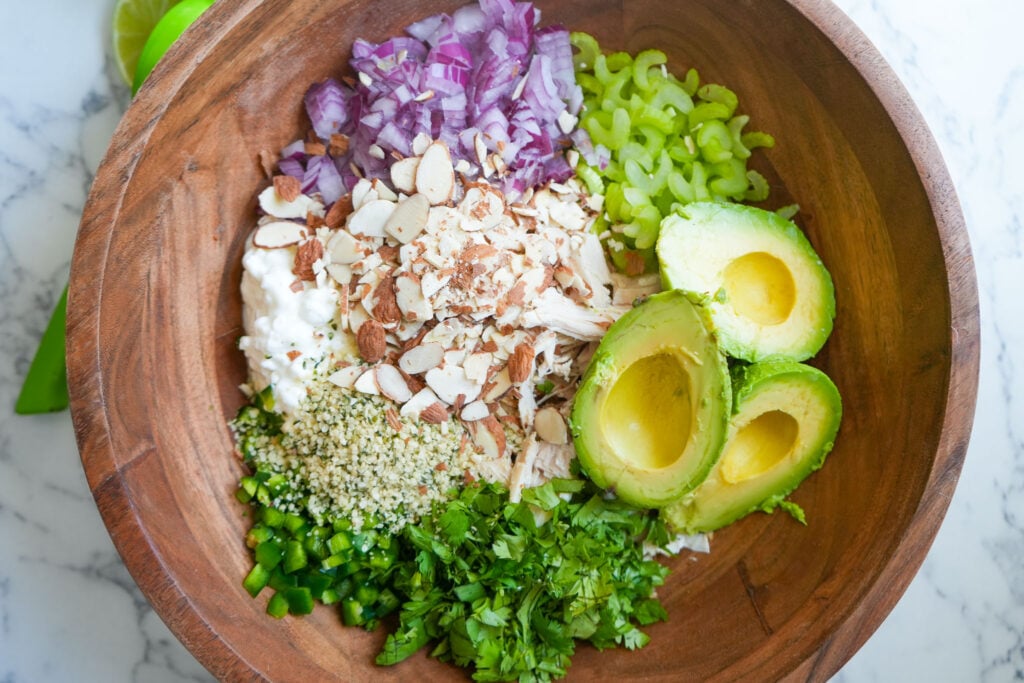
This combination naturally appears in many whole foods such as:
• lentils and beans
• salmon with vegetables and grains
• Greek yogurt with berries and seeds
• eggs with sautéed vegetables
This is also why many nutrition experts emphasize meal composition instead of strict calorie counting. A balanced meal with protein, fiber-rich plants, and healthy fats tends to support appetite regulation naturally. If you need help figuring out how to build a healthy plate, check out my guide that breaks it down easily.
The Downside of the Protein and Fiber Hype
Even though both nutrients are beneficial, the internet has a way of turning good ideas into extreme ones.
Very high protein diets can sometimes crowd out fiber-rich foods like vegetables, legumes, and whole grains. Some nutrition experts warn that excessive protein intake, especially from heavily processed animal sources, may negatively affect gut health if plant intake drops too low.
Fiber also works best when it comes from diverse whole foods, not just isolated powders. The goal isn’t to obsess over hitting exact numbers every day. The goal is building meals that naturally contain both.

The Real Takeaway
The current focus on protein and fiber isn’t completely random. These two nutrients influence some of the most important drivers of long-term health:
• hunger regulation
• metabolic stability
• muscle preservation
• gut microbiome health
But the real lesson isn’t to chase protein powders or fiber supplements. It’s to build meals around whole foods that naturally contain both.
When meals include adequate protein, fiber-rich plants, and healthy fats, the body tends to regulate appetite, energy, and digestion far more effectively. And that’s why these two nutrients keep showing up in research.