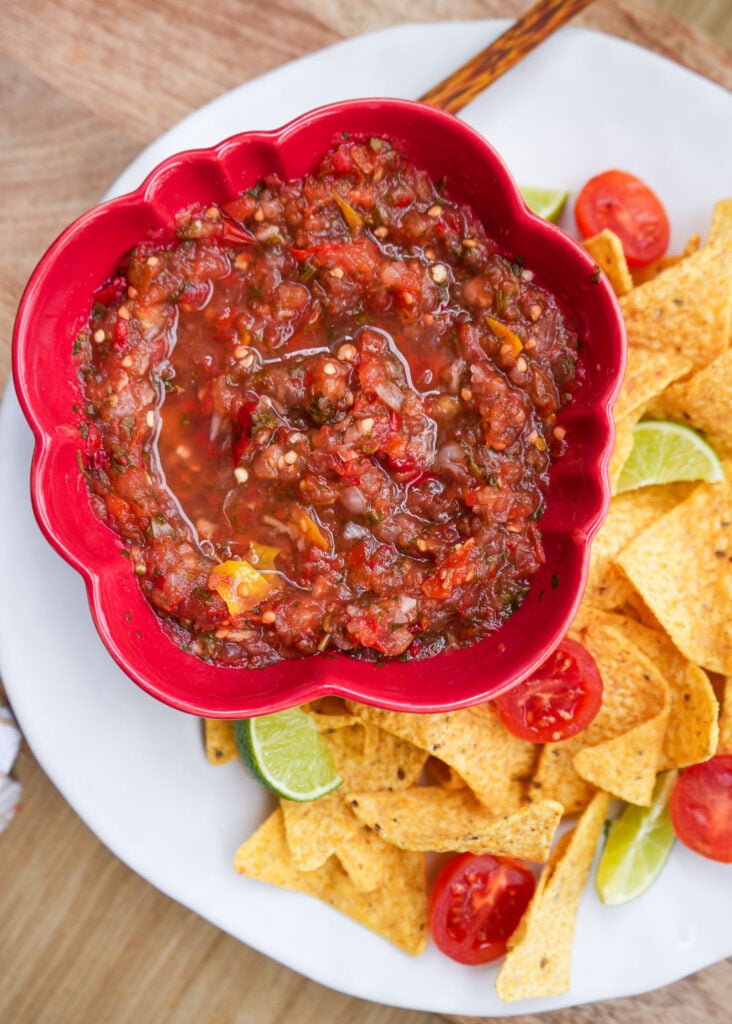
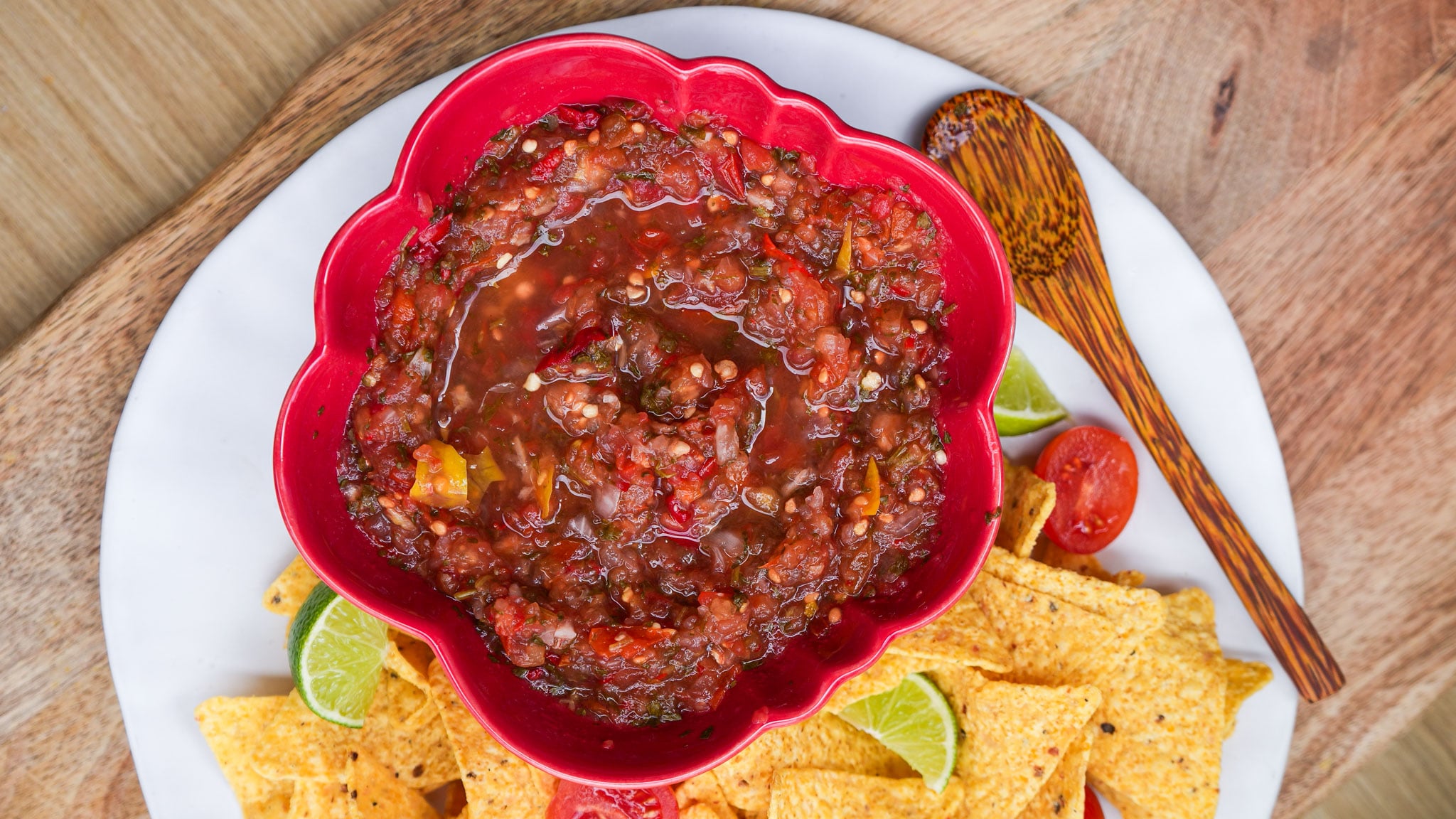
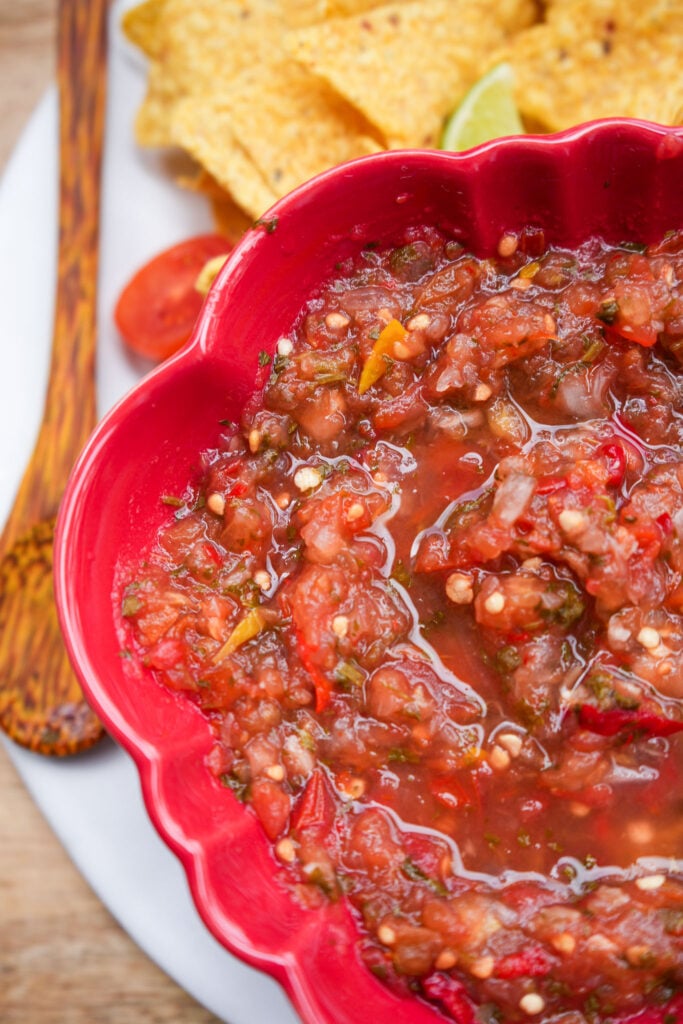
Once you learn how easy it is to make fermented salsa, you may never want regular salsa again. It’s fresh, spicy, tangy, naturally probiotic, and all you have to do is make your favorite salsa, add the right amount of salt, and give it a few days to ferment. I love mine around day 4, when the flavor has gotten noticeably tangier and everything tastes even better than when it started.
WATCH HOW TO MAKE IT
Why Ferment Salsa?
Fermenting salsa uses lacto-fermentation, the same natural process used to make foods like sauerkraut and fermented pickles. Naturally occurring lactic acid bacteria feed on sugars in the vegetables and produce lactic acid, which creates that delicious tangy flavor while naturally preserving the salsa.
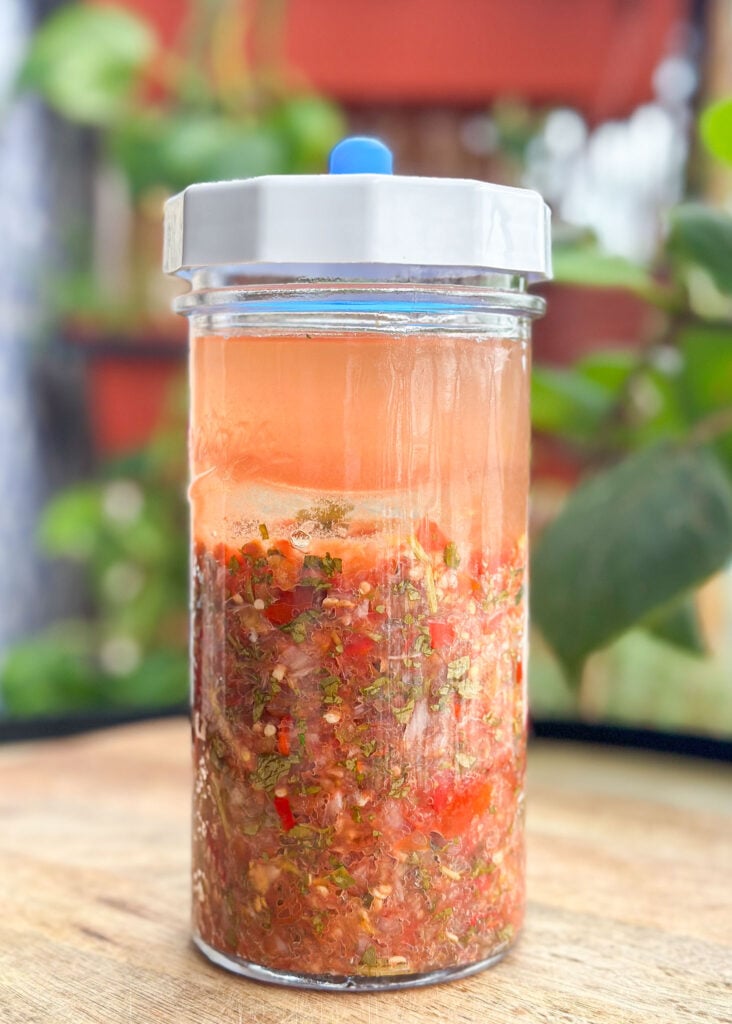
Because the salsa isn’t pasteurized after fermentation, it also contains live beneficial bacteria, making it an easy way to incorporate more fermented foods into your diet.
And honestly, the flavor alone is reason enough to make it. The tomatoes become brighter and tangier, the heat gets a little more pronounced, and the salsa develops a complexity that you don’t get from freshly made salsa.
*SEE BELOW THE RECIPE CARD FOR TIPS AND ANSWERS TO COMMON QUESTIONS*
Fermented Salsa Recipe
Ingredients
- 6-8 Roma tomatoes, or tomatoes of choice (canned tomatoes WILL NOT work here because they have been heat treated)
- 1 Small red onion
- 2 Jalapeños optional
- 2 Habaneros optional
- 1/2 cup Fresh cilantro plus more as desired
- 2 Limes juiced
- Sea Salt 2% or 3% of the total weight
Instructions
- Make the salsa.Add the tomatoes, red onion, jalapeños, habaneros, cilantro, and lime juice to a food processor. Pulse a few times until finely chopped, but don’t blend it into a purée.

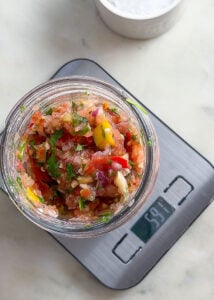
- Weigh and salt.Weigh the finished salsa, then calculate your salt based on that weight. For my 590g batch at 3%, I used approximately 18g salt.
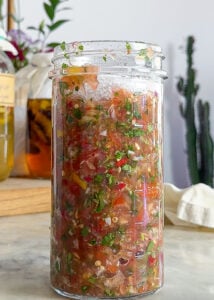
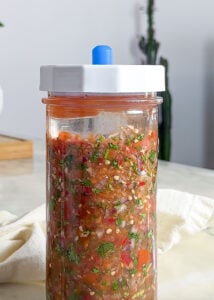
- Pack the jar.Transfer the salsa and all of its juices to a clean fermentation-safe jar. I use a 32-ounce mason jar with a silicone fermentation lid. Keep everything down. Press the salsa firmly into the jar so the natural liquid rises, then place a fermentation weight on top to keep the solids beneath the liquid as much as possible.
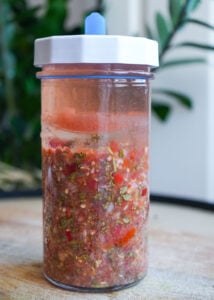
- Ferment.Seal the jar and leave it at room temperature, away from direct sunlight, for about 2 to 4 days. You should start seeing small bubbles and notice the aroma becoming increasingly tangy. Be sure to open the jar each day to release the gases and any built up pressure
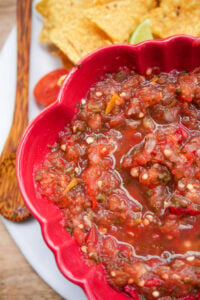
- Taste and refrigerate.Start tasting around day 2. Once the salsa has the tanginess you like, remove the fermentation weight, seal the jar, and move it to the refrigerator (with the brine) or serve immediately.Before serving I drain most of the excess liquid. In this case it was about 1/4 cup. (If you prefer a thicker salsa, simply drain off some of the liquid right before serving)I love mine at day 4. Spicy, tangy, bubbly, and full of flavor.

Notes
- Salt Ratio: I recommend a 2–3% salt ratio by weight for fermented salsa. I prefer 3%. To calculate it, multiply the weight of your prepared salsa in grams by 0.02 for 2% or 0.03 for 3%.
- Storage: Once the salsa tastes tangy and fermented to your liking, transfer it to an airtight container and refrigerate. Keep the salsa stored with its natural liquid and drain any excess just before serving.
- Shelf Life: Properly fermented salsa will generally keep for 1–2 months in the refrigerator, but the flavor and texture are best within the first few weeks. Always use a clean utensil when serving.
Nutrition
Tips for making the Best Fermented Salsa
- Use fresh ingredients. Because this is such a simple recipe, starting with ripe tomatoes, fresh peppers, cilantro, and lime makes a noticeable difference.
- Don’t purée the salsa. Pulse just enough to finely chop everything while leaving some texture. Don’t blend non-stop.
- Use clean equipment. Make sure your jar, fermentation weight, lid, utensils, and anything else touching your salsa are freshly cleaned before you begin.
- Leave room in the jar. Fermentation produces carbon dioxide and can cause the liquid to rise. A little headspace helps prevent a bubbly salsa explosion on your counter.
- Keep the vegetables beneath the liquid. A fermentation weight is one of my favorite tools for making this easy. Some people like to use a clean stone.
What If Mold Grows on My Fermented Salsa?
Fermented salsa is a quick ferment, so mold is less common than with longer ferments like sauerkraut. If mold does appear, it’s usually a sign that some of the vegetables were exposed to air instead of staying submerged beneath the salty brine.
If you see fuzzy mold anywhere in the salsa itself, or unusual pink, green, blue, or black growth, discard the batch. For the safest approach, I do not recommend simply scooping mold off and eating the salsa underneath. Keeping everything submerged, using clean equipment, and limiting oxygen exposure are the best ways to prevent mold in the first place.
COMMON QUESTIONS
Fresh tomatoes work best for fermented salsa because they naturally carry the microorganisms that help kick-start fermentation. Canned tomatoes have been heat-treated, so I recommend sticking with fresh, ripe tomatoes for this recipe.
Yes. Keep your fermented salsa stored with its natural brine in the refrigerator. The liquid helps keep the vegetables submerged and limits their exposure to oxygen, which helps preserve the salsa. If you prefer a thicker salsa, simply drain off some of the liquid right before serving rather than before storing it.
I don’t recommend leaving out the salt. Salt plays an important role in creating an environment that favors lactic acid bacteria while discouraging unwanted microbes. For this recipe, stick with a 2–3% salt ratio by weight rather than reducing it significantly.
Fermentation speed depends a lot on the temperature of your kitchen. In warmer weather, your salsa may become active within 24–36 hours, while cooler temperatures can slow things down. Move the jar somewhere slightly warmer, away from cold drafts, and give it a little more time.
Fermented salsa tastes like fresh salsa with more tang, depth, and a subtle natural fizz. As it ferments, lactic acid develops and gives the tomatoes and peppers a pleasantly sour, almost zesty flavor. The longer you let it ferment, the tangier and more developed the flavor becomes.
Don’t forget to leave a comment and ⭐️⭐️⭐️⭐️⭐️ star rating down below if you try this recipe! Subscribe to my newsletter and follow along on Instagram for more recipes and updates.